Madrid Travel Tips from Omar Allibhoy, Spanish Chef of Tapas Revolution

Conversations with Locals

Since opening Tapas Revolution, Omar Allibhoy has transformed the landscape of Spanish dining in the UK, one tapas restaurant at a time. The Madrilenian is also part of the Jamie Oliver’s Food Tube family, dishing out the secrets to traditional Spanish cooking. We talk to Omar about the must-try dish from Madrid, the Spanish way to do tapas, and why you should never go for paellas in Madrid. 

sms-cover-flat_r

Spanish Made Simple: Foolproof Spanish Recipes for Every Day by Omar Allibhoy of Tapas Revolution (Quadrille £20) Photo: Martin Poole

What do you feel defines the cuisine in Madrid?

Madrid is undoubtedly the capital of tapas. Every street is full of tapas bars, all making their own specialty. But of course it wasn’t always that way and something which is less known but equally important is the cuisine around offal. Madrid was heavily bombarded during the civil war and very poor as a result. Families used to make great recipes with cheaper animal cuts to save money and still use offal in cooking today.

How do Spanish people do tapas?

In Spain, tapas is more than just food, it’s how we connect, and is an excuse to get together. In the UK people meet ‘for a pint’, in Spain we ‘go for tapas’. Sharing food from the same plate brings us all a bit closer, and enhances conversation. It’s human nature to share what we have as opposed to eating your own thing.

When we go for tapas, we generally hop in and out of a number of tapas bars eating and drinking the house specialty of each place.

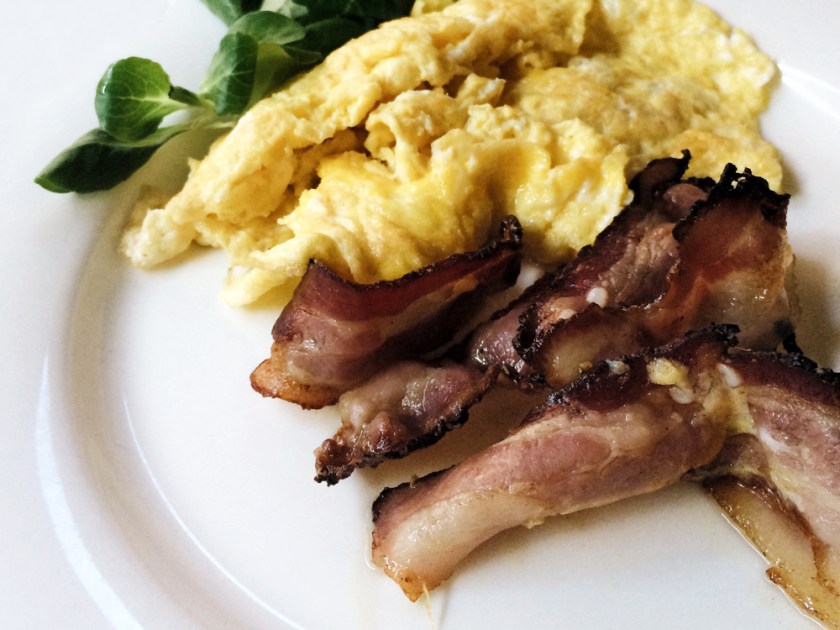
013-food

Photo: Tapas Revolution

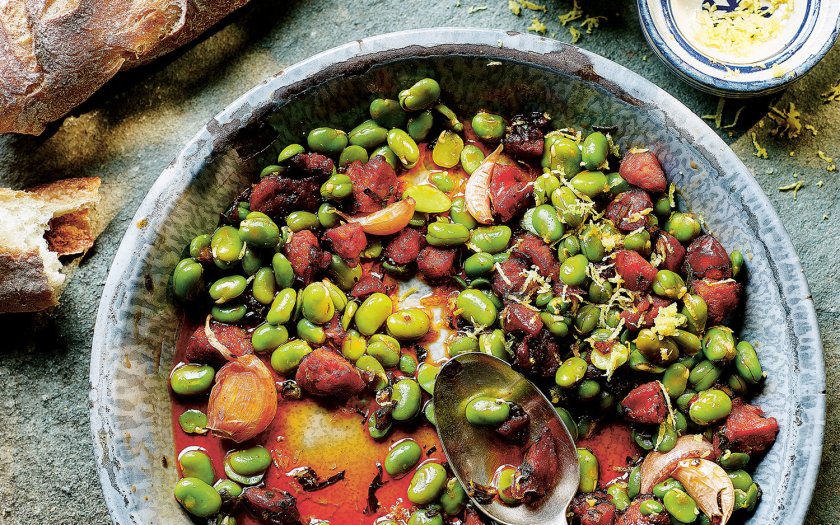
sms-recipe-habas-1600x1000px

Habas con chorizo. Photo: Tapas Revolution

What is the difference between British food and Spanish food?

Where to start? Cuisines are constantly evolving and the British food scene is now shifting with the influx of other cuisines. Unfortunately, the local produce is limited because the climate and geography is not quite as diverse as Spain.

Spanish cuisine has evolved for the last 2,000 years to become what it is today. Different cultures have chipped in – Phoenicians, Greeks, Romans, Arabs and Christians. To put it into perspective, in Spain there is no concept of ‘Spanish cuisine’, it’s a lot more regional. For example, we have Galician and Catalonian cuisines. I think it’s fair to say there is a lot more variety in Spain compared to the UK.

What are some local dishes you feel travellers can’t leave Madrid without trying? 

Callos a la Madrileña, it’s a beef tripe stew. It may not sound appealing but it’s a very traditional dish. Otherwise, don’t leave without trying patatas bravas or a good bocadillo de calamares (deep fried squid ciabatta).

Where do you love to eat in Madrid?

I love lots of them! A few you have to try are Casa Lucio, Era, Cachivache, Sala de Despiece, Taberna de la Daniela, Combarro and St. James

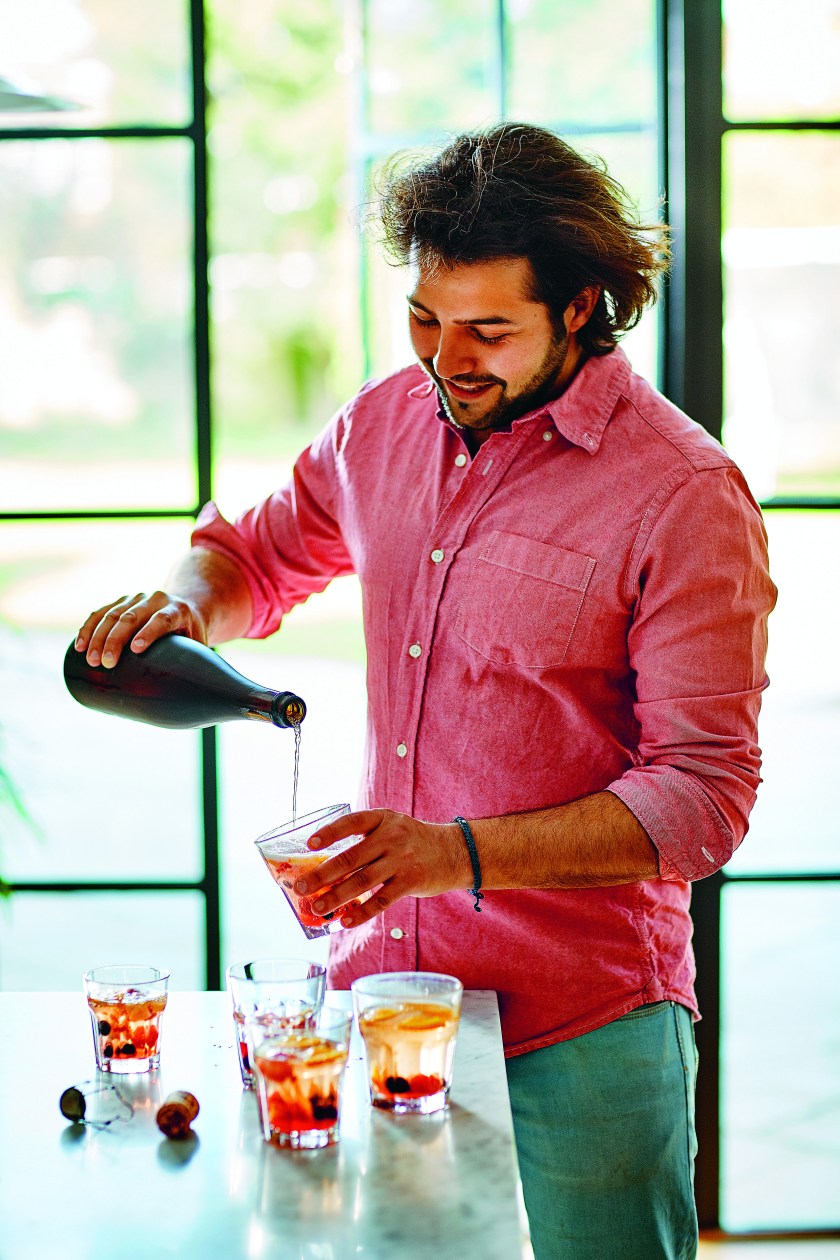
spanish-made-simple-sangria-made-with-spanish-sparkling-wine

Spanish Made Simple: Foolproof Spanish Recipes for Every Day by Omar Allibhoy of Tapas Revolution (Quadrille £20) Photo: Martin Poole

Name one best kept secret of Marche 

Madrid Río is the new refurb and regeneration plan for the south of Madrid and is a beautiful walk or bike ride away. Also, Parque del Capricho is one of my favourites and you hardly ever see any tourists there, so I guess it’s still a secret!

What’s your perfect itinerary to explore the city? 

Grab the bicycles, which are battery assisted, and make your own route, you are never going to see it all in one trip. If you are into food, know when you are going to finish for lunch! Maybe this Google map can help you with some of my favourite restaurants in my hometown. 

Name some tourist traps travellers should avoid in Madrid

The usual things, if there are food photos on the window, stay away from that restaurant. Paellas in Madrid are not great. Don’t waste your money in souvenir shops. Generally ask the locals, you are always closer than you think for authentic tapas.

Do paellas in Madrid taste bad? 

Paellas are only truly great in the Valencia region, where they originally come from. Rice is one of the most difficult ingredients to cook correctly in my opinion, and they are the masters of it. When in Madrid, eat like the Madrileños!

What’s your favourite day trip to take from Madrid?

I think Segovia. You can eat proper cochinillo asado (roasted suckling pig) at Meson de Candido while looking at the most stunning Aqueduct.

You recently had to defend Jamie Oliver on adding chorizo to paella. What is it about Spanish cuisine that the Spanish are so passionate about defending?

Our cuisine has been corrupted and distorted a lot because of a lack of knowledge and good communicators who spread the word about traditional Spanish cuisine. Food is fundamental to the Spanish and they don’t like to see traditional dishes messed around and altered. On the other hand, I think a bit differently.


WHERE TO EAT IN MADRID


Casa Lucio
Where: Calle Cava Baja, 35, 28005 Madrid, Spain
For: Spanish food

La Era Restaurante
Where: Calle de la Infanta Mercedes, 103, 28020 Madrid, Spain
For: High-end dining

Cachivache Taberna
Where: Calle de Serrano, 221, 28016 Madrid, Spain
For: Tapas

Sala de Despiece
Where: Calle de Ponzano, 11, 28010 Madrid, Spain
For: Tapas

Taberna de la Daniela
Where: Calle del Gral. Pardiñas, 21, 28001 Madrid, Spain
For: Cocido madrilenio

Combarro
Where: Calle Reina Mercedes, 12, 28020 Madrid, Spain
For: Seafood

Restaurante St James Madrid
Where: Calle de Juan Bravo, 26, 28006 Madrid, Spain (and more)
For: Rice dishes
 

WHERE TO GO IN MADRID


Madrid Río
Where: Puente de Toledo, 28019 Madrid, Spain
For: Parks and play areas

Parque del Capricho
Where: Paseo de la Alameda de Osuna, 25, 28042 Madrid, Spain
For: Parks

The 24 Hour Guide to Eating in Venice, Italy

Italy

It’s mid day in Venice, and the Venetians are congregating in bàcaris, where alcohol is often paired with small plates of crostinis, deep fried seafood balls and mini sandwiches. Forget the overpriced restaurants along the Grand Canal. The heart of Venetian cuisine is in this street food – cicchetti. These bite sized pieces of food are the perfect combination of Italian ingredients served on a toothpick, each ranging from one to three euros. We round up the three places you need to know if you have 24 hours in Venice. 

Look forward to: Cicchetti

Al Merca

img_4812_edited

Where: Campo Bella Vienna, 213, 30125 Venezia, Italy
What: Panini
For: Cicchetti

Equipped with just a storefront, Al Merca is a haven for the mid afternoon wine and miniature panino. No seating areas? No problem, just blend in with the locals standing in front of the store, with food and drink in hand. The counter is stuffed with panino, some with gorgonzola cheese and others with parma ham. Amongst these, other cicchetti such as deep fried seafood can be found. Take your pick from any of these, but the Italian cheese and prosciutto panino always wins. 

Osteria Alla Ciurma

img_4829_edited

Where: Calle Galeazza, 406A, 30125 San Polo, Venezia VE, Italy
What: Crostinis
For: Cicchetti

The orders never stop at Osteria Alla Ciurma, and neither does the drinking. A glass of wine starts at €1.50, and ranges from friulano to prosecco. Seating areas are few, but you wouldn’t need that if you’re going for the drinks and finger food. The top item to try? The different types of crostinis. Owner Marco Paola is a whiz at experimenting with crostini toppings, such as stuffed eggplant, baccalà mantecato (creamed codfish) and anchovies. 

Pontini

img_4827_edited

Where: Fondamenta Cannaregio, 1268, 30121 Venezia, Italy
What: Seafood pastas
For: A sit down restaurant

Of course, it’s not all cicchetti in Venice. Fresh seafood in the Venetian markets always find their way inside this trattoria along Cannaregio. To avoid the queue at Pontini, dinner at 6 pm is essential. Pastas with any kind of seafood are exceptional, as the pastas are doused in a thick seafood stock, the result of a hearty combination  of shellfish and tomatoes. Every bite is filled with the flavours of the sea. 

Milan Travel Tips from Marianna Zuliani, Milanese Foodie & Blogger

Conversations with Locals

Marianna Zuliani is a Milanese girl about town and food blogger. This fashion graduate gets the lowdown of where and what to eat in Italy’s fashion capital. Marianna reveals what a real Italian breakfast is (sorry no eggs here), where to shop for vintage Hermès, and why she thinks Starbucks in Milan will work. 

32280097_177093579672456_7759137640342880256_n

Photo: Marianna Zuliani

What’s Milanese culture to you? 

Milanese culture is many things to me. It’s a city rich in culture from its past and from its present time, a coexistence of different, sometimes opposite things that, when put together, creates something strong and unique.

What do you feel defines Milanese cuisine?

That’s kind of a tricky question, because Milanese cuisine is characterised itself by some typical and famous dishes like saffron risotto, ossobuco and cotoletta alla milanese, but to me the Milanese cuisine is something else.

I think that in Italy, Milan is the most developed city from every point of view, as well in the kitchen. Here, you can find great international cuisine and the best of Italian nouvelle cuisine.

What is the one local dish you feel travellers can’t leave Milan without trying? 

I think that travellers should not miss the typical risotto allo zafferano with ossubuco. It’s a risotto made with saffron and sliced veal shank. I’m not a fan of Milanese traditional cuisine but this dish is really good. 

Where do you love to eat in the city?

I have a few different places on top of my lists. I like to eat chefs’ cuisines. Among my favourite places there’s Essenza, a beautiful restaurant where you can eat delicious dishes made by the chef Eugenio Boer, and chef Matias Perdomo’s Contraste, where you can eat very good and unique dishes that you’ll never forget. If I want to go for something more simple and traditional, I choose Giacomo Bistrot, a little elegant bistrot that makes Italian dishes, my favourite pizza at Dry, or some angus fillet at El Porteño, an Argentine restaurant. And lots of aperitivos, my favourite is definitely at Pandenus.

What’s a typical Italian breakfast for you? 

The typical Italian breakfast is definitely “cornetto e cappuccino” at the bar, that means croissant and cappuccino. Croissants can be with jam, cream or chocolate, and the cappuccino can be also an espresso or a macchiato, it depends on what you prefer, but definitely this is the real Italian breakfast. 

29714790_164989774143211_5061396436080394240_n

Photo: Marianna Zuliani

41668390_284083262423004_3836504056653397914_n

Photo: Marianna Zuliani

Name one Italian dining etiquette most travellers miss

Of course! Do not cut spaghetti and do not eat them with a spoon. Don’t even think about putting pasta on a slice of bread – I saw someone doing it once and I was really upset! Just eat the dishes as the waitress serves you and you will enjoy it at its best. 

What about your favourite shopping places? 

There are a few vintage shop where I love to go – Vintage Delirium and Mania Vintage, which carries Louis Vuitton, Chanel and Hermès bags and some very nice jewelry! 

41548314_689273818107314_5255988302216163165_n

Photo: Marianna Zuliani

What’s your favourite day trip from Milan? 

My favourite day trip from Milan is definitely to Bergamo. It’s a really lovely town close to Milan, more or less 1 hour by car. I love the part of the city called Bergamo Alta, a middle aged village built up on hills. I suggest that you visit it and stop for lunch or dinner at Baretto di San Vigilio, a lovely restaurant accessible from a funicular. 

How do you think the new Starbucks opening in Milan will score? 

I definitely think that Starbucks will easily survive in Italy. I don’t even know why they took so long to open it here. Primarily, Milan is an international city with lots of tourists and locals that would love to have Starbucks in town. I know – Italians say that our coffee is the best in the world, and that’s okay, but Starbucks sells a different product from our coffees. You go to Starbucks to have a chai latte, or a frappuccino, or a pumpkin spice latte, and so on. All these things that we do not have in our cafès in Italy. 

Plus, a lot of cafes here are very ugly, at least to me, and all of them are far away from the concept of a cafè like Starbucks. Let me explain – there is no place here where you can go, order your coffee and sit down to work with a laptop, read a book, or simply take your time, and I think we need that kind of places. I also think that Starbucks will do a better job and serve better coffee than many Italian cafès. For all this reasons, I think that it’s great that Starbucks is opening and that it will definitely survive.

WHERE TO EAT IN MILAN


Essenza
Where: Via Marghera, 34, 20149 Milano, Italy
For: Risotto

Contraste
Where: Via Giuseppe Meda, 2, 20136 Milano, Italy
For: Course meals

Giacomo Bistrot
Where: Via Pasquale Sottocorno, 6, 20129 Milano, Italy
For: Traditional Italian cuisine

Dry
Where: Via Solferino, 33, 20124 Milano, Italy
For: Pizzas 

El Porteño
Where: Viale Gian Galeazzo, 25, 20136 Milano, Italy
For: Angus fillets 

Pandenus
Where: Corso Concordia, 11, 20129 Milano, Italy (and more)
For: Aperitivos
 

WHERE TO GO IN MILAN


Vintage Delirium
Where: Via Giuseppe Sacchi, 3, Milano, Italy
For: Vintage shopping

Mania Vintage
Where: Via Fratelli Bronzetti, 11, 20129 Milano, Italy
For: Vintage shopping